Research Orientation
The practice is structured around sustained investigation into:
Structured World Systems, including capitalism, social stratification, and consumer culture
The Operational Relationship Between Ethics and Aesthetics, understood as a reciprocal system in which aesthetic structures actively shape ethical perception, behavior, and decision-making rather than merely reflecting them
Formative Conditions—heat, pressure, weight, movement, exposure—as universal forces shaping material and perceptual change
Second Nature: industry understood as an extension of ecological logic rather than its opposition
Textural Memory embedded within industrial materials and built environments, wherein surface, wear, and material residue function as records of labor, use, and environmental interaction, directly informing sculptural forms and installation systems within the work
These inquiries inform both the conceptual framing and material execution of the work.
Studio Process
Current operations within Pilar Studios prioritize material studies, form, texture, and the juxtaposition of contradictory visual states. The studio employs overlooked and industrially derived materials as a means of exposing the latent ethical frameworks embedded within aesthetic systems.
Within this model, aesthetics are understood as operative structures rather than surface conditions. Ethical positions emerge not as declared messages, but as consequences of material choice, spatial organization, and perceptual framing. The work proposes that ethical orientation is inseparable from aesthetic decision-making—shaping how systems are inhabited, interpreted, and sustained.
Methodology
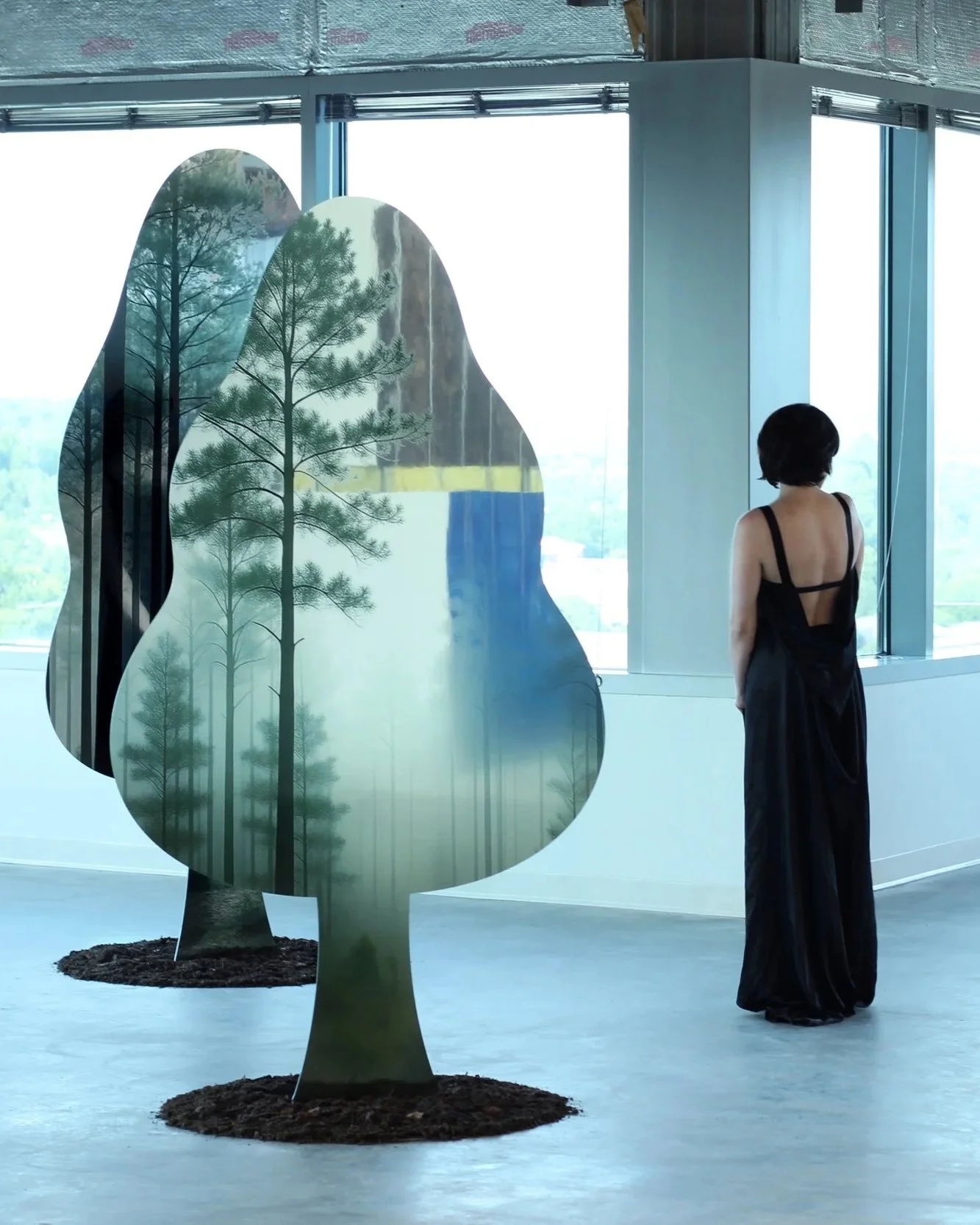
Pilar’s methodology centers on steel, plastic, wood, soil, and preserved organic matter, assembled into sculptural and installation-based systems that function as site-responsive archives. These structures frequently operate as containment vessels—housing living or static material while foregrounding the conditions that govern preservation, growth, and decay.
The resulting works translate these research concerns into physical form through deliberate material arrangement and spatial framing. Industrial materials are assembled in ways that slow down perception, inviting close observation of surface, structure, and scale. Rather than illustrating concepts directly, the installations create conditions in which viewers encounter the tension between control and growth, preservation and decay, and human intervention and natural response as lived, spatial experiences.
Philosophical Framework
The practice is informed by social ecology, critical theory, and material philosophy, drawing structural influence from:
Murray Bookchin’s social ecology
Timothy Morton’s ecological thought and hyperobjects
Theodor Adorno’s critical theory
Arte Povera’s emphasis on material honesty and process
These references function as scaffolding rather than illustration, shaping the internal logic of the work without resolving into didactic narrative.
Practice Position
While frequently associated with environmental themes, Pilar Studios does not position its work as activist documentation. Instead, the practice examines industry as an adaptive ecological condition—situating humanity within the systems it produces, rather than outside them.
The studio’s output functions as an evolving archive: a record of material systems in motion.
Publications & Discourse
Curriculum Vitae